NBSC-IBM FACULTY SHOWCASE LOCALIZED RESEARCH AT INTERNATIONAL SUSTAINABILITY CONFERENCE
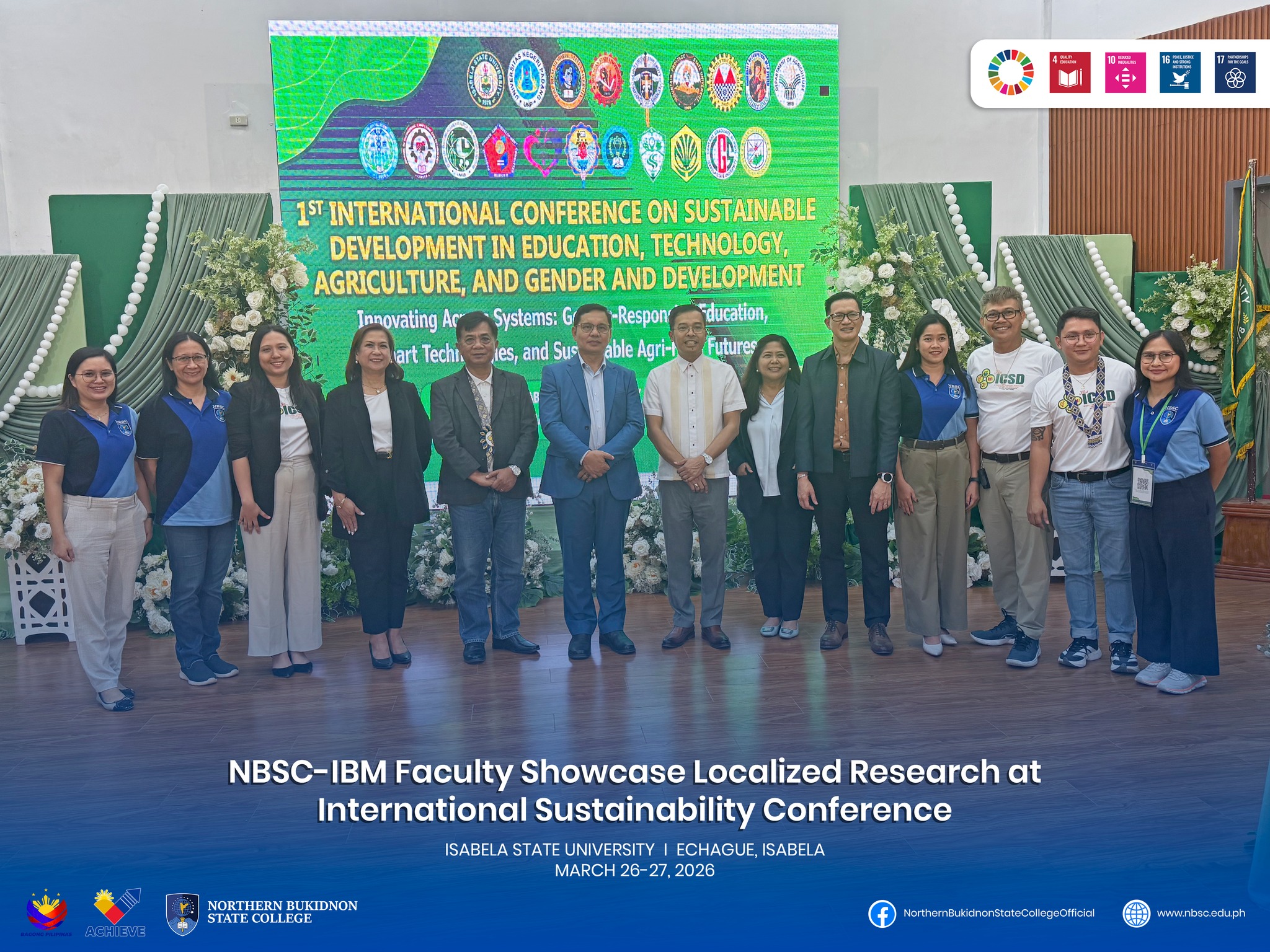
Seven faculty members from Northern Bukidnon State College’s Institute for Business Management (NBSC-IBM) recently presented their scholarly work at the 1st International Conference on Sustainable Development in Education, Technology, Agriculture, and Gender and Development (SDETAGD). Hosted by Isabela State University in Echague, Isabela on March 26-27, 2026, the conference provided a global platform for researchers to share insights on contemporary sustainability challenges.
The delegation presented localized studies that addressed critical economic and agricultural issues within Manolo Fortich, Bukidnon:
• Mr. Julius S. Gabinete: “Assessing the Economic, Environmental, and Cultural Impacts of Tourism Activities: Evidence From a Local Tourism Destination in the Philippines”;
• Ms. Libra Mae D. Manzano: “Business Owners’ Perceived Operational Satisfaction and Workforce-Related Challenges in Local Tourism in Manolo Fortich, Bukidnon”;
• Mr. Josefino M. Ladao Jr.: “Strategic Interventions for Sustainable Meat Utilization and Food Security in Manolo Fortich, Bukidnon”;
• Ms. Teofany M. Siton: “Business Size, Income, and Growth Opportunities among Tourism Enterprises in Manolo Fortich, Bukidnon”;
• Dr. Sheila K. Maglente: “Local Government Intervention in Strengthening Meat Utilization and Value Chains in Manolo Fortich, Bukidnon”;
• Ms. Jonnaline E. Bacuñata: “Cold Chain and Transport Gaps in Food Safety Assurance Compliant Meat Utilization in Manolo Fortich, Bukidnon”; and
• Ms. Kristine Deanne Veck C. Tortola: “Intermediary Influence and Pricing Power in the Local Pork and Poultry Market of Manolo Fortich, Bukidnon”.
Through these presentations, the faculty engaged in critical discourse with international practitioners, reinforcing the global relevance of their work and NBSC’s dedication to fostering a culture of systematic inquiry and data-driven problem-solving. By translating local findings into recognized scholarly contributions, the College continues to expand its intellectual footprint and drive evidence-based progress for the community.