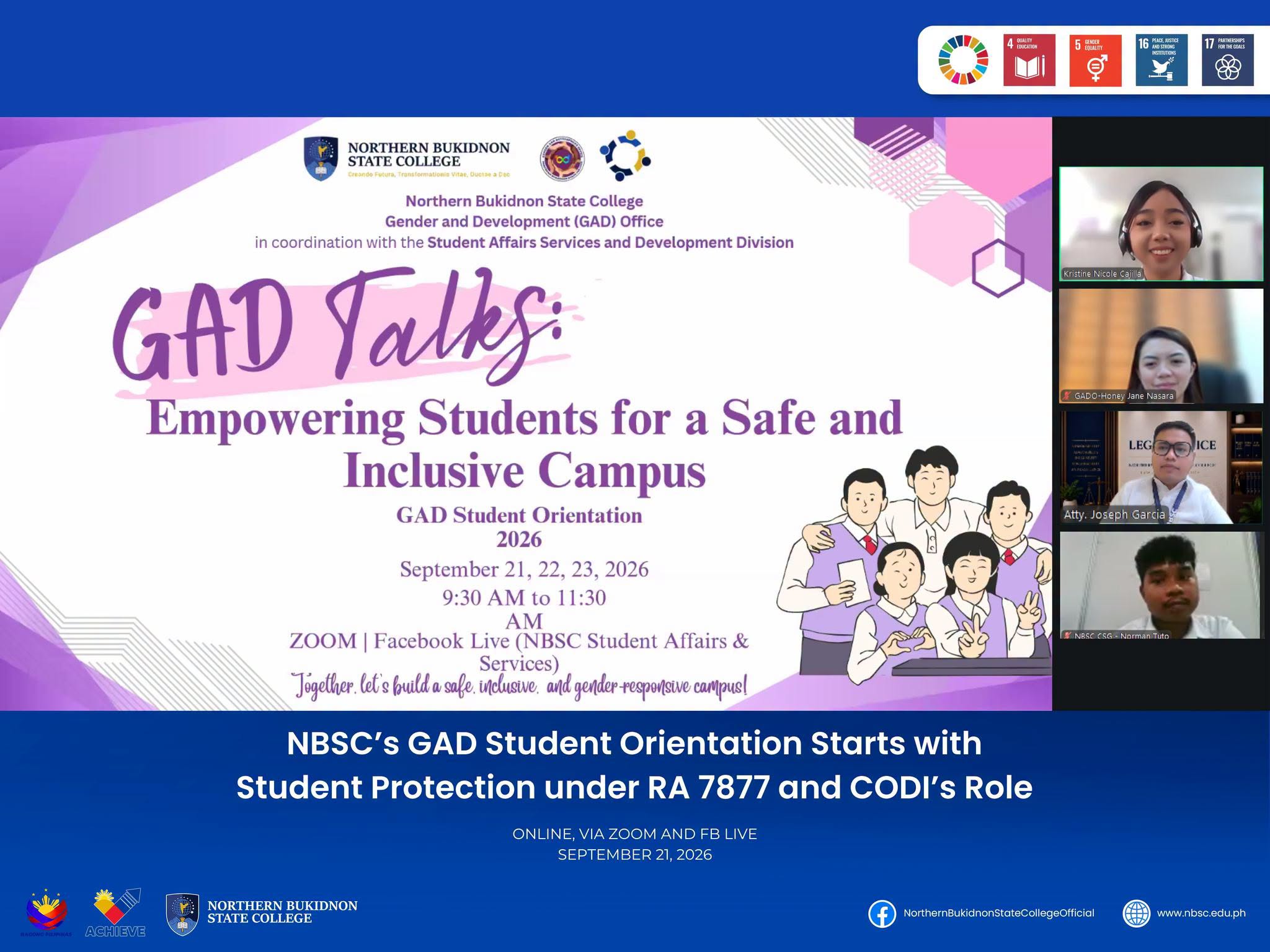
NBSC’S GAD STUDENT ORIENTATION STARTS WITH STUDENT PROTECTION UNDER RA 7877 AND CODI’S ROLE
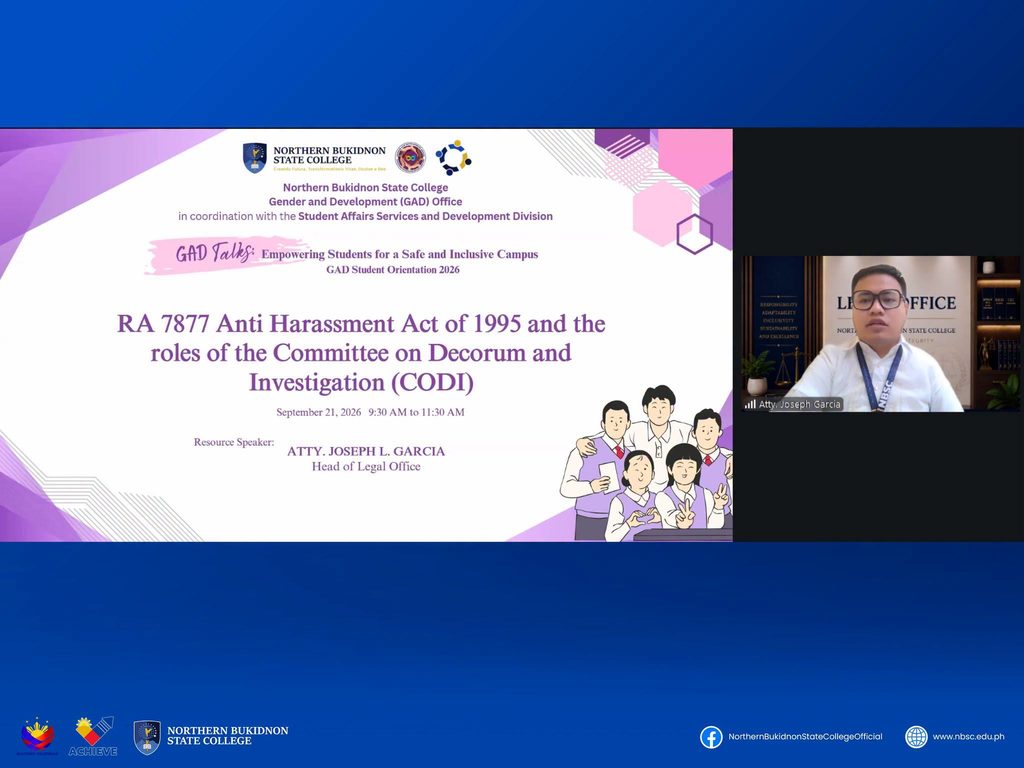
Northern Bukidnon State College (NBSC), through the Gender and Development Office (GADO), opened the Gender and Development (GAD) Student Orientation on September 21, 2026, with the theme “GAD Talks: Empowering Students for a Safe and Inclusive Campus.” The activity was conducted online through Zoom and Facebook (FB) Live via the official Facebook page of the NBSC Student Affairs, Services, and Development Division (SASDD).
In her welcoming remarks, Rowena E. Bagongon, Director of the SASDD, encouraged participants to use the knowledge and insights gained from the orientation and build a safe, inclusive, and gender-responsive environment on campus.
Atty. Joseph L. Garcia, Head of the Legal Office and the resource speaker for the first session, discussed Republic Act No. 7877, or the Anti-Sexual Harassment Act of 1995, and the role of the Committee on Decorum and Investigation (CODI).
Atty. Garcia walked participants through the law’s provisions on sexual harassment in educational settings. He also explained the responsibilities of CODI in receiving and investigating complaints. The presentation gave participants a clearer picture of the protections available to them and the proper steps for raising concerns.
The three-day activity runs from September 21 to 23, 2026, with succeeding sessions covering topics intended to help students recognize gender-related concerns, communicate with greater respect, and become more aware of the policies that protect people from discrimination and gender-based harm. These lessons can also guide them in their roles as members of their families, workplaces, and communities outside the College.
With a better grasp of these issues, students can carry the lessons from the orientation into situations that call for fairness, respect, and responsible action. This strengthens the values NBSC seeks to cultivate among its students and encourages them to contribute positively to the people and communities they become part of.
Written by: Alliana Isa E. Vivares
Public Affairs and Information Office